Your Controller Is the Wrong Size and It's Costing You Games
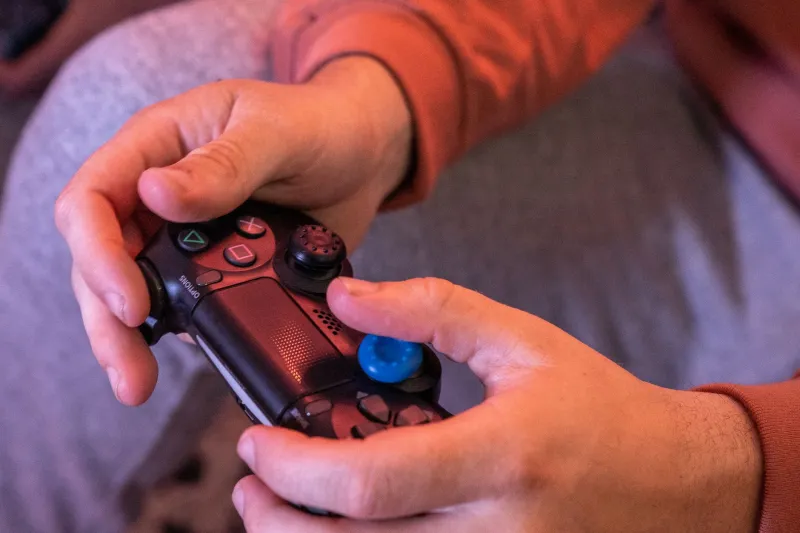
Here's a question most gamers never ask themselves: does your controller actually fit your hands?
Not "does it feel okay" — because plenty of things feel okay until they don't. We're talking about whether the dimensions of the controller you're using every single day are actually matched to the physical dimensions of your hands. Because if they're not, you're leaving performance on the table. Every session.
This isn't a niche concern for ergonomics nerds. It's one of the most overlooked variables in competitive gaming, and once you understand what's actually happening when a controller doesn't fit right, you won't be able to unsee it.
Why Hand Anthropometry Actually Matters
Anthropometry is just the science of measuring the human body — and when it comes to gaming, the relevant measurements are pretty specific. We're talking about hand length (from the base of your palm to the tip of your middle finger), hand breadth (across the knuckles), and finger length ratios.
According to data from the CDC's anthropometric surveys, adult male hand length in the US averages around 7.4 inches, while adult female hand length averages closer to 6.7 inches. That's nearly a three-quarter-inch difference — and that gap matters enormously when you're talking about where your thumbs naturally land on analog sticks, how far your index fingers have to stretch to reach triggers, and how much grip tension you're unconsciously generating just to hold the thing steady.
When a controller is too large for your hands, you're constantly overextending. Your fingers are working harder than they need to just to maintain contact with the inputs, which burns out your forearm muscles faster and introduces micro-tremors that mess with precision inputs. When a controller is too small, you're cramping up — your hand wraps too far around the grips, your thumbs sit at awkward angles on the sticks, and your wrist ends up doing compensatory work it was never designed to do.
Either way, you're fighting your gear instead of your opponents.
The "It Feels Fine" Trap
The tricky part is that most of this happens below the threshold of conscious awareness. You sit down, pick up your controller, and it feels fine. Maybe a little tight after a few hours, but nothing you'd flag as a real problem.
That's exactly the issue. Ergonomic mismatches don't usually announce themselves loudly. They show up as gradual performance degradation — your aim gets a little shakier in the third hour of a session, your reaction times slow down slightly when you're fatigued, your inputs become less consistent in clutch moments. You chalk it up to tilt or bad luck. But a significant chunk of it might just be that your controller doesn't fit.
Think about it this way: a basketball player wouldn't use a ball that's half a size too big and just "deal with it." A golfer gets fitted for clubs based on their height and grip style. Competitive gamers deserve the same level of intentionality about their primary tool.
How Different Controller Sizes Stack Up
Let's get concrete. The Xbox Series X controller is one of the larger options on the market — it's got a longer grip and a wider body that tends to work well for hands in the medium-to-large range (roughly hand lengths of 7 inches and above). The PlayStation DualSense sits somewhere in the middle, with a slightly more compact grip that accommodates a broader range of hand sizes. The Nintendo Switch Pro Controller skews smaller overall, making it a reasonable fit for smaller hands but potentially cramped for larger ones.
Then there's the whole universe of third-party and pro controllers. The Scuf Instinct Pro, the Xbox Elite Series 2, the Victrix Pro BFG — these aren't just feature-laden flex pieces. They're designed with adjustability in mind, which means they can actually accommodate different hand geometries in ways that stock controllers simply can't.
If you've got smaller hands and you've always used an Xbox controller because that's what your friends use, there's a real chance you've been operating at a disadvantage without realizing it. The same goes in reverse — smaller controllers can be genuinely problematic for larger-handed players, especially in games that demand rapid, precise thumb movement.
What the Pros Are Actually Doing
Here's the thing about pro gamers that rarely gets discussed in the content about their setups: they don't just pick controllers because they like how they look or because a sponsor handed them one. The serious ones — especially in FPS and fighting game circuits — are incredibly deliberate about fit.
There's a reason certain pros use aftermarket back paddles at specific positions, or swap out analog stick caps for taller or shorter options. A lot of that customization is about compensating for a controller body that doesn't perfectly match their hand size. Taller stick caps effectively bring the input surface closer to shorter thumbs. Repositioned paddle buttons reduce the reach required for smaller hands. It's not just preference — it's biomechanical optimization.
You don't have to be a pro to apply this thinking. But you do have to start paying attention.
How to Actually Figure Out What Fits You
Start with a simple measurement. Grab a ruler and measure from the base of your palm (where it meets your wrist) to the tip of your middle finger. That's your hand length. Then measure across your knuckles with your hand flat — that's your hand breadth.
As a rough guide:
- Small hands (under 6.7 inches): Look at controllers with a compact grip. The DualSense, Switch Pro Controller, or 8BitDo Pro 2 are worth considering. Stick caps on the shorter side will generally work better.
- Medium hands (6.7 to 7.5 inches): You've got the most options. Most major controllers will work reasonably well, but pay attention to grip texture and stick positioning.
- Large hands (over 7.5 inches): Prioritize controllers with longer grips and wider bodies. The Xbox Elite Series 2 or the Scuf Instinct are solid starting points. Taller stick caps can help bridge the gap on shorter controllers.
Beyond raw size, pay attention to where your thumbs naturally rest when you hold the controller loosely. They should land on the sticks without any reaching or cramping. If you're having to consciously position your thumbs rather than letting them fall naturally, that's a fit issue.
Stop Treating Controllers Like One-Size-Fits-All Gear
The gaming industry has done a pretty good job of convincing us that the controller in the box is just the controller. It ships with the console, you plug it in, you play. End of story.
But that framing ignores a ton of individual variation. Human hands come in wildly different sizes and proportions, and the controller that's perfect for one person can be genuinely counterproductive for another. The performance gap isn't always dramatic — but in competitive gaming, where margins are razor-thin, even a small edge matters.
Getting your controller fit right isn't about being precious or high-maintenance. It's about removing an unnecessary obstacle between your intentions and your inputs. Once the hardware actually fits, you can stop compensating and start playing.
And that's when things get interesting.