Comfort Is Killing Your Climb: When Your Perfect Setup Becomes Your Biggest Weakness
There's a moment every serious gamer chases — the one where your controller stops feeling like a tool and starts feeling like an extension of your hands. Your grip is dialed. Your thumbstick tension is exactly right. Your trigger stops are set to a hair's width. Everything clicks.
And then, quietly, almost without you noticing, your rank starts slipping.
It doesn't make sense at first. Nothing changed. That's actually the problem.
The Comfort Trap Is Real — And It's More Common Than You Think
Coaches in the competitive scene have a name for this phase. Some call it the "setup plateau." Others just call it getting cozy. Whatever the label, the pattern looks the same: a player locks in their configuration, their performance stabilizes, and then — over weeks or months — their results start trending down even though their setup feels better than ever.
"Comfort is a signal that your nervous system has fully adapted," says one esports coach who's worked with ranked ladder grinders across multiple titles. "The problem is that the game keeps changing around you. The meta shifts. Opponents find new angles. And you're still running the same muscle memory patterns that worked six months ago."
That last part is the kicker. Muscle memory isn't just about mechanical skill — it's about contextual skill. Your hands learned to respond to a specific set of game conditions. When those conditions evolve, your body doesn't automatically update the software.
How Muscle Memory Becomes a Cage
Here's what's actually happening physiologically. When you repeat a motion enough times, your brain shifts processing from the prefrontal cortex — where conscious decision-making lives — down into the basal ganglia, which handles automated behavior. This is a good thing in the short term. It frees up mental bandwidth so you can focus on higher-level decisions instead of thinking about how to hold your controller.
But automated behavior is, by definition, resistant to change. Once a pattern is grooved deep enough, your body will default to it under pressure even when it's no longer the optimal response. You're not making a choice — your nervous system is making it for you, based on old data.
In a competitive game environment that patches every few weeks and where opponent strategies evolve constantly, that lag between "what your hands know" and "what the game currently demands" becomes a real performance gap.
The Signs You've Crossed Into Stagnation
Recognizing the plateau is half the battle. Here are the red flags coaches say they watch for:
- You never feel uncomfortable during a session. Not a good sign. Growth requires friction.
- Your losses feel random or unfair, not instructive. If you can't identify what you need to change, you're probably not adapting.
- You've stopped experimenting with settings. If the last time you touched your controller config was months ago, you've likely stopped actively optimizing.
- Your reaction patterns feel automatic but your outcomes are declining. This is the clearest signal that your autopilot is flying the wrong route.
None of this means your setup is bad. It means your setup has become static in a dynamic environment.
What Esports Coaches Actually Recommend
The instinct for most players is to blow everything up — swap controllers, change their grip style completely, reset to zero. Coaches almost universally push back on this.
"Destabilizing your fundamentals to escape a plateau is like burning down your house because you don't like the paint color," one coach told us. "The goal is targeted disruption, not chaos."
The approach that tends to work is introducing small, deliberate friction into your setup — changes specific enough to force your hands out of autopilot without dismantling what's actually working.
Some specific hardware-level adjustments worth trying:
Thumbstick tension. If you've been running the same tension for months, bump it up or down by one increment. Even a minor change forces your fine motor control to recalibrate, which temporarily pulls processing back into conscious attention. You'll feel slightly "off" for a session or two — that's the point.
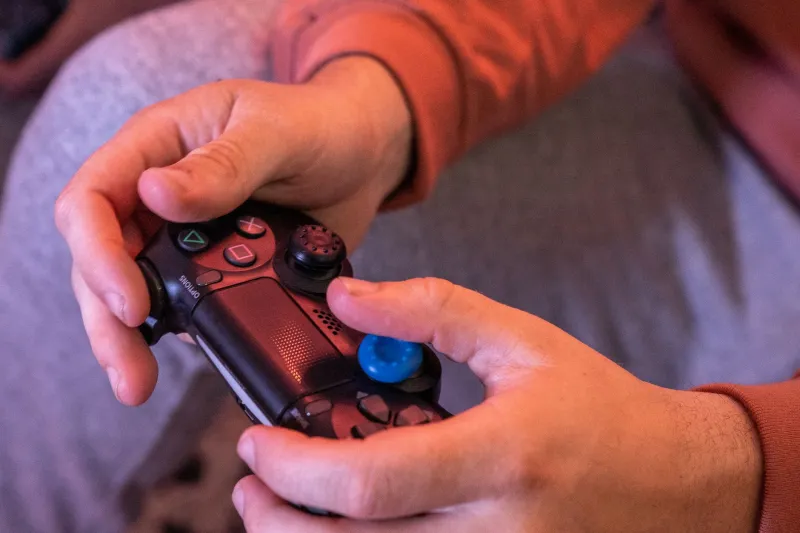
Thumbstick height. Swapping to a taller or shorter cap on one stick (usually the right/aiming stick) changes your leverage and input arc in a way that's subtle but real. It won't wreck your game, but it will make you think about your aim inputs again instead of running them on autopilot.
Trigger depth or resistance. If you're on a controller with adjustable triggers, shifting the stop depth by even one setting forces a relearn of your firing timing. For games where timing windows have tightened in recent patches, this kind of recalibration can actually put you ahead of opponents who are still running old timing grooves.
Grip texture or wrap. Changing your grip material — even temporarily swapping to a different texture — alters the tactile feedback your palms receive and forces more active hand positioning. It sounds minor. In practice, it's surprisingly effective at pulling players out of passive, rote movement.
The Mental Side of Breaking Through
Hardware adjustments are only part of the equation. The other part is psychological — specifically, rebuilding your tolerance for discomfort during play.
Players deep in a plateau have often unconsciously optimized for feeling good over playing well. Their setup is comfortable. Their habits are ingrained. The experience of playing feels smooth, even when results are declining. Breaking that pattern requires accepting a temporary performance dip in exchange for long-term adaptability.
One technique coaches recommend: "discomfort sessions." Set aside one or two sessions per week where you deliberately play with a modified setup — different stick tension, different grip, different button mapping — and focus entirely on adaptation rather than results. Don't track your rank during these sessions. Track what you're learning.
Over time, this practice builds what some coaches call "setup agility" — the ability to perform competently even when your configuration isn't perfectly tuned. That skill pays dividends in tournament environments, travel situations, or any time you're forced to play on unfamiliar gear.
Grip the Game, Not Just the Controller
The deeper truth here is that the best setup isn't the one that feels the most comfortable — it's the one that keeps you actively engaged with your own performance. Comfort is a tool, not a destination.
If your controller feels perfect but your rank disagrees, that tension is data. Your hands have stopped asking questions. The fix isn't a new controller or a complete overhaul. It's a few deliberate adjustments that force you to grip the game again, instead of just holding the hardware.
Stagnation is sneaky. But it's also fixable — one thumbstick at a time.