Your Brain Is Still Holding the Old Controller — Here's How to Actually Let Go
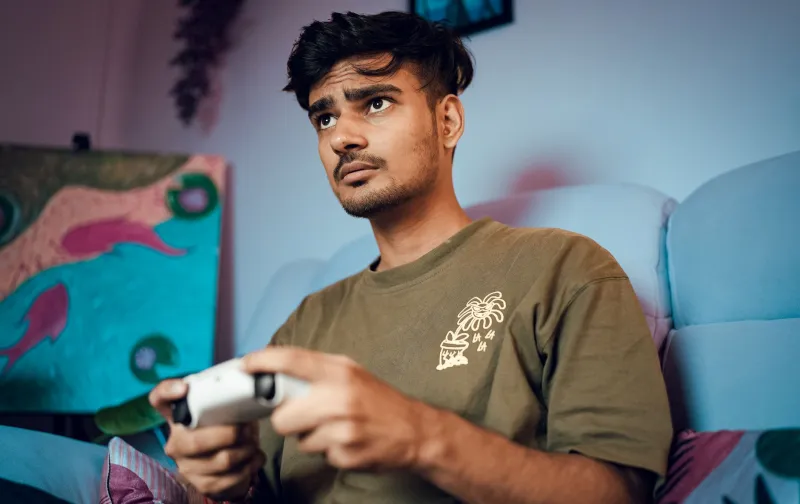
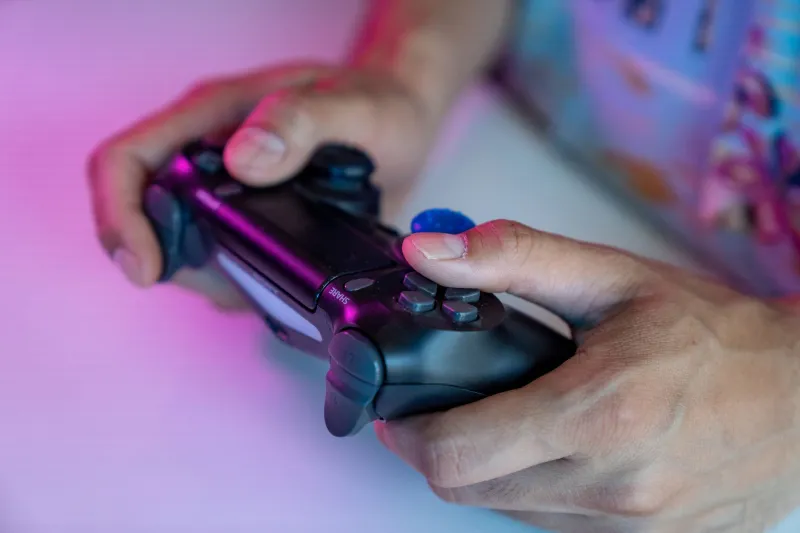
You bought the new controller. It's sitting on your desk. It feels incredible in your hands — better weight distribution, tighter face buttons, grips that don't make your palms sweat through a three-hour ranked session. By every objective measure, it's an upgrade.
And yet, two weeks in, you're playing worse than you were before.
This isn't a gear problem. It's a neuroscience problem. And understanding what's actually happening inside your brain when you switch controllers might be the most underrated piece of competitive gaming knowledge out there.
What Muscle Memory Actually Is (And Why It's So Hard to Overwrite)
The term "muscle memory" gets thrown around constantly in gaming circles, but it's a little misleading. Your muscles don't remember anything — your brain does. Specifically, a region called the basal ganglia stores procedural motor patterns: the stuff you do automatically, without thinking. Every time you've flicked your right thumb to reach a face button, adjusted your grip pressure during a reload, or instinctively tensed your trigger finger at a specific depth, those actions have been encoded and reinforced through repetition.
Neuroscientists call this process myelination. The more you repeat a movement, the more your nervous system wraps the associated neural pathways in myelin — a fatty sheath that essentially speeds up signal transmission. After hundreds of hours on the same controller, those pathways are practically highways. Switch the controller, and suddenly you're asking your brain to reroute traffic through dirt roads.
That's why the first few sessions on a new piece of gear feel so disorienting. It's not that you got worse. It's that your brain is running the old map on a new territory.
The Adaptation Timeline Is Longer Than You Want It to Be
Here's the uncomfortable truth: for most experienced players, meaningful adaptation to a new controller takes somewhere between three and eight weeks of consistent play — and that's if you're actively working through the transition rather than rage-quitting back to your old setup after a bad session.
Several factors influence where you land on that timeline:
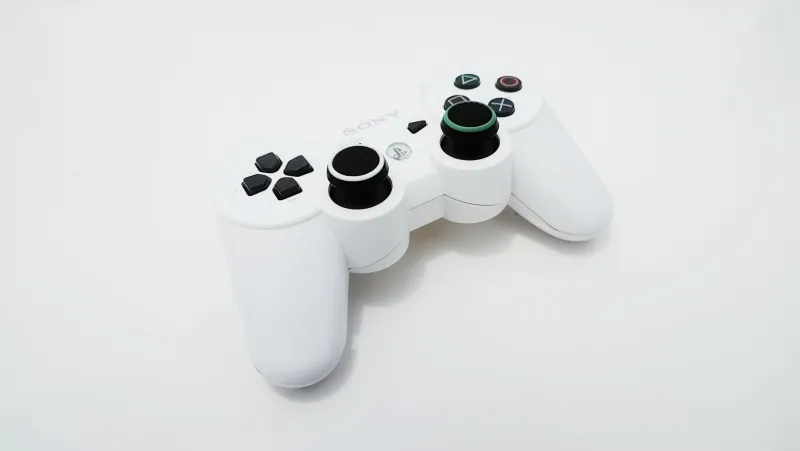
Controller similarity. Switching from one Xbox-layout controller to another is a much smaller cognitive leap than going from an Xbox-style layout to a DualSense. The farther apart the two controllers are in shape, button placement, and trigger feel, the longer your brain needs to reconcile the difference.
Hours logged on the old controller. A player with 2,000 hours on a specific setup is going to have a harder transition than someone with 200. Deeper grooves take longer to redirect.
Game genre. Fast-twitch FPS play is brutal during transitions because the margin for error is so small. Strategy games or slower-paced RPGs are more forgiving. Some players deliberately use lower-stakes game modes to break in new gear before bringing it into competitive play.
Your training approach. Passive use — just playing your normal games — is the slowest path to adaptation. Deliberate practice, where you're consciously drilling specific movements on the new controller, can compress the timeline significantly.
Two Players, Two Very Different Outcomes
Look at how this plays out in the real world and you'll see the same story repeat itself with different endings depending on how the transition was handled.
One semi-pro Warzone player made the switch from a standard DualSense to a Scuf Instinct mid-season after struggling with back-button access during high-pressure fights. He gave himself a hard rule: no ranked play for the first two weeks on the new controller. Custom lobbies only, drilling specific movement and combat scenarios. By week three, he was back in ranked. By week five, his K/D had climbed past where it was before the switch. The key wasn't the controller — it was the structured transition.
Contrast that with a streamer who picked up a new elite controller after seeing it dominate a sponsored post and immediately took it into his live ranked grind. The first week was rough, which his chat found entertaining. But he kept reverting to his old controller when the pressure spiked, which meant he was never fully committing to the adaptation process. Three months later, he still hadn't fully settled into the new gear. Two timelines, running in parallel, neither one getting resolved.
The pattern is consistent: players who fail the transition usually fail because they never actually committed to it.
How to Know If a Switch Is Actually Worth It
Before you even open the box on new gear, run through this framework:
Identify a specific problem. "This controller feels better" is not a reason to switch. "I keep fumbling the jump-crouch input because the bumper placement doesn't match my hand size" is a reason to switch. Vague dissatisfaction with your current setup is usually a performance plateau in disguise — and new gear won't fix that.
Audit your current performance ceiling. If you're already playing at the top of your current skill bracket and genuinely believe your gear is the limiting factor, a switch might unlock something real. If you're mid-climb and struggling with fundamentals, the controller is almost certainly not what's holding you back.
Calculate the disruption cost. A three-to-eight week dip in performance is the price of admission for most controller transitions. Is the potential upside on the other side worth that? If you're heading into a tournament in six weeks, the answer is probably no. If you've got an offseason in front of you, it might be exactly the right time.
Commit completely or don't bother. Half-measures are the enemy here. If you're going to switch, pack up the old controller so you're not tempted to bail when things get rough. Give yourself a real trial period — minimum four weeks — before making any judgments.
The Gear Is a Tool, Not a Shortcut
There's a version of this conversation that ends with "just buy better gear and your problems are solved." That's not what we're saying here. The controllers and grips we cover on Game Gripper can absolutely make a difference — the right fit for your hand size, the right trigger sensitivity for your playstyle, the right grip texture for your sweat patterns — these things are real and they matter.
But gear only pays off if you give your nervous system the time and the structure to actually absorb it. The players who get the most out of premium equipment aren't the ones who buy the most stuff. They're the ones who commit to the transition and trust the process long enough for their brain to catch up with their hands.
Your old controller isn't just sitting in a drawer. It's still running somewhere in your basal ganglia, waiting for you to reach for it. Letting go of it — really letting go — takes longer than you think. But when you do it right, the performance on the other side is absolutely worth the ride.