Why Playing the Same Controller Forever Might Be Quietly Capping Your Skill
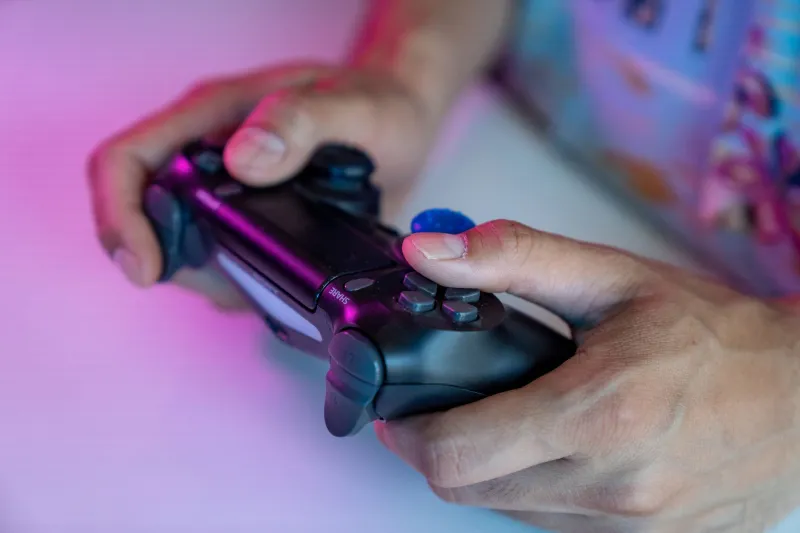
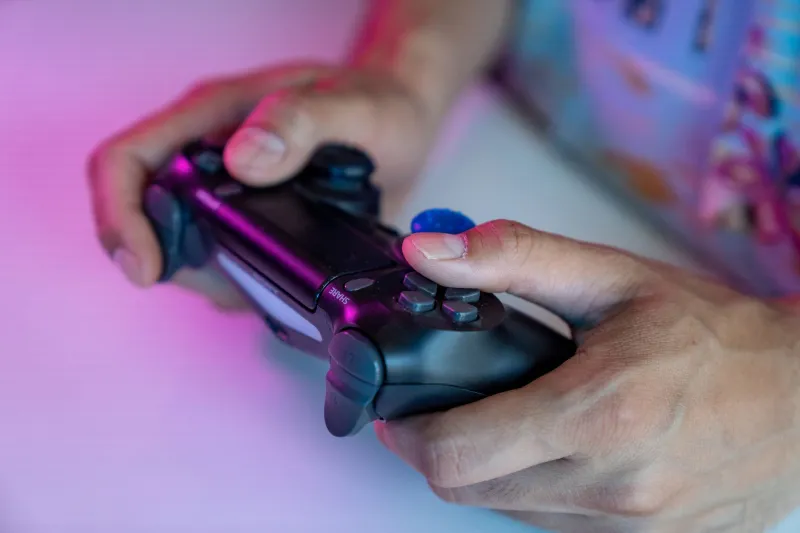
There's a version of this story every serious gamer knows. You find a controller that clicks — literally and figuratively. The grip feels right, the triggers respond exactly how you expect, and after a few hundred hours your hands just know where everything is. You stop thinking about the hardware and start thinking about the game. That's the dream, right?
Maybe not entirely.
Because here's the thing nobody really talks about: that deep familiarity you've built with your controller isn't just a neutral baseline. It's a set of deeply grooved movement patterns baked into your motor system — and some of those patterns are probably working against you.
What Muscle Memory Actually Is (And What It's Not)
The term "muscle memory" gets thrown around a lot in gaming circles, but it's worth being precise about what's actually happening in your body. Your muscles don't store memory — your brain does. Specifically, a region called the basal ganglia plays a huge role in automating repetitive movement sequences, and your cerebellum handles the fine-tuning of those movements over time.
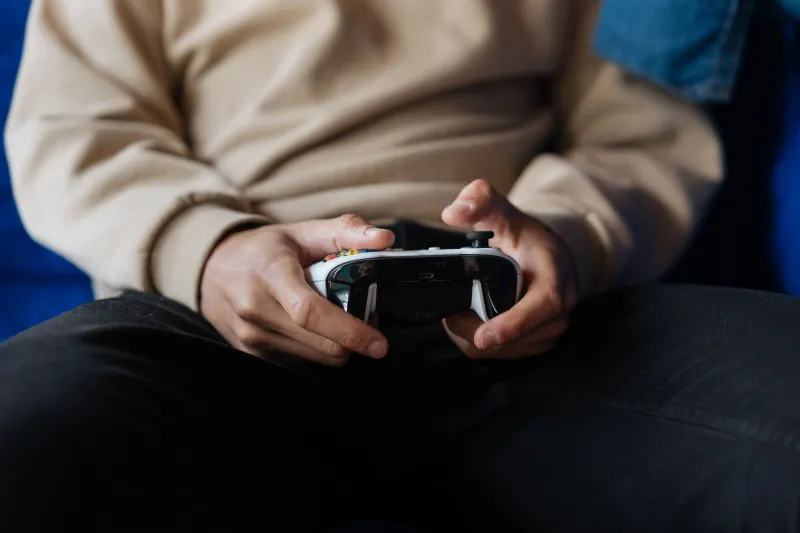
When you repeat an action enough — say, the exact wrist angle you use when you reach for the right bumper on your Xbox controller — that movement gets encoded as a motor program. It becomes fast, efficient, and largely unconscious. That's genuinely useful. You don't want to consciously think about button placement mid-gunfight.
But here's where it gets tricky. Those motor programs aren't just encoding the correct version of your movements. They're encoding whatever version you actually practiced — including compensations, micro-adjustments, and habits that developed around your specific controller's quirks. Worn-down thumbstick caps, a trigger that sits slightly different than stock, a grip shape that's been subtly deforming under your palm for two years. Your nervous system adapted to all of it, and you don't even know it happened.
The Plateau Nobody Warns You About
Researchers who study motor learning have a name for what happens when you stop improving despite continued practice: the automaticity trap. Once a skill becomes automatic, your brain essentially stops paying close attention to it. You're no longer in a learning state — you're in an execution state. And execution states are resistant to refinement.
For gamers, this shows up as a frustrating kind of plateau. Your aim feels consistent but you can't push it further. Your reaction inputs feel smooth but something's slightly off under pressure. You're not getting worse, but you're definitely not getting better, and you can't figure out why.
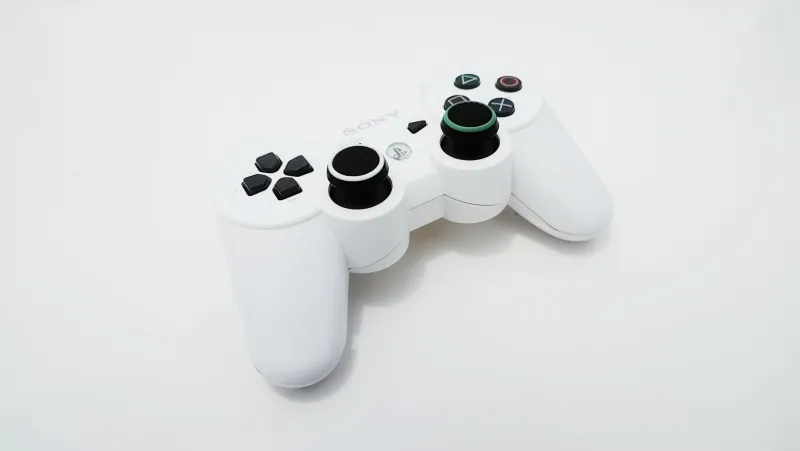
Jordan, a semi-pro Apex Legends player based out of Atlanta, described it like this: "I'd been using the same DualSense for like 18 months. I thought I had the controller completely dialed. Then I borrowed a friend's PS5 controller — same model, but his thumbstick caps were different, slightly taller — and suddenly I was hyper-aware of every movement I was making again. My aim was shaky for a week. But after that week, I hit a rank I'd been stuck below for months."
That's not a coincidence. That's your brain getting knocked out of autopilot.
The Case for Controlled Disruption
This is the counterintuitive part: deliberately introducing friction into your setup — not chaos, but controlled disruption — can actually accelerate skill development by forcing your motor system back into an active learning state.
Neuroscientists call this contextual interference. Studies going back to the 1970s and 1980s, including foundational work by Battig and later Shea and Morgan, showed that practicing skills under variable conditions leads to better long-term retention and transfer than blocked, repetitive practice under identical conditions. The struggle of adapting is doing the learning work.
For controllers specifically, this might mean:
- Rotating between two controllers with slightly different thumbstick tension — your brain has to stay engaged with the actual mechanics of aiming rather than running on autopilot
- Swapping grip styles periodically — even moving from a palm grip to a hybrid grip for a few sessions can expose movement habits you didn't know you had
- Trying a controller with different trigger resistance — if you've adapted to a hair-trigger modded controller, occasionally playing stock forces you to be more intentional about your inputs
None of this means you should be switching controllers every week or playing on random gear before a tournament. That would just be noise. The goal is strategic disruption during practice periods, not competition.
What Competitive Players Are Actually Doing
A handful of competitive players — mostly in the FPS and fighting game communities — have started treating controller rotation the way athletes treat cross-training. You don't play basketball every single day if you want to get better at basketball. You run, you lift, you do things that build the underlying physical systems.
Mia, a Street Fighter VI competitor from the Chicago scene, started alternating between her main fight stick and a standard Xbox pad during casual practice sessions about eight months ago. "The stick is my tournament setup, no question. But playing pad made me realize I was relying on some really sloppy shortcuts that the stick was covering for. When I went back to the stick, I had to rebuild some things from scratch — but they came back cleaner."
That rebuilding process is the point. It's uncomfortable, but discomfort in a learning context is a sign your nervous system is actually doing something.
How to Actually Do This Without Tanking Your Performance
A few practical guidelines if you want to experiment with this:
Keep your tournament or ranked setup consistent. This isn't about using weird gear when it counts. Your main controller should stay stable for competitive play.
Use alternate controllers during low-stakes practice. Casual lobbies, aim trainers, or even offline practice modes are the right context for this kind of disruption.
Give it at least two to three weeks before you judge it. The initial performance dip is real and expected. That's the adaptation happening. Don't bail after three sessions because your aim felt off.
Pay attention to what feels different. The whole point is heightened awareness. If you're swapping controllers and not noticing anything, you're probably not paying close enough attention to what your hands are actually doing.
Come back to your main setup before any ranked push. Let your system consolidate the new learning before you test it under pressure.
The Bigger Picture
Gaming culture tends to worship consistency. Same controller, same settings, same everything — because consistency feels like control. And there's real value in that, especially at the competitive level.
But consistency and stagnation can look identical from the inside. If you've been on the same controller for years and you feel like your ceiling isn't moving, it might not be your aim, your sens, or your game sense. It might just be that your hands have gotten too comfortable.
Sometimes the best thing you can do for your game is pick up something that feels a little wrong — and then figure out why.