Left or Symmetric? How Stick Placement Is Quietly Deciding Your Competitive Fate
Here's a question most gamers never think to ask: why does switching from an Xbox controller to a PlayStation controller feel so catastrophically wrong at first, even if both devices are technically doing the same job?
It's not the weight. It's not the button labels. It's not even the triggers — though those are their own conversation. It's the sticks. Specifically, it's where those sticks live on the controller face, and how deeply your hands have already memorized that geography without you ever consciously signing off on it.
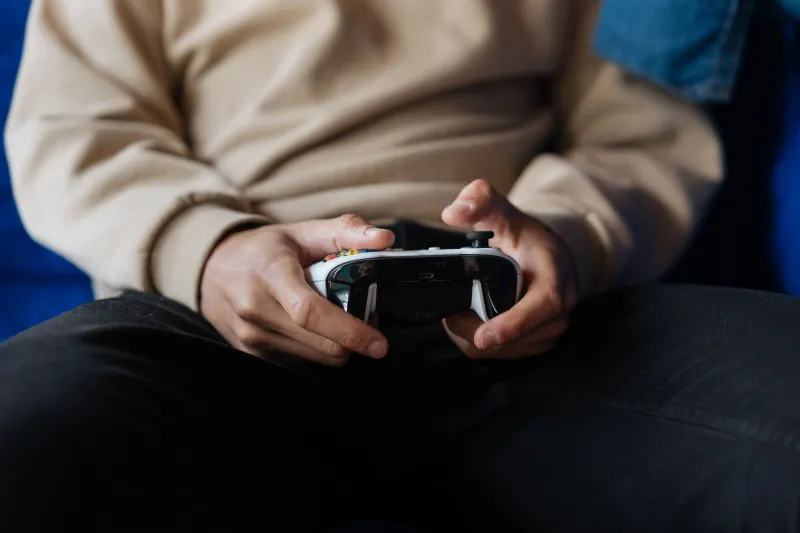
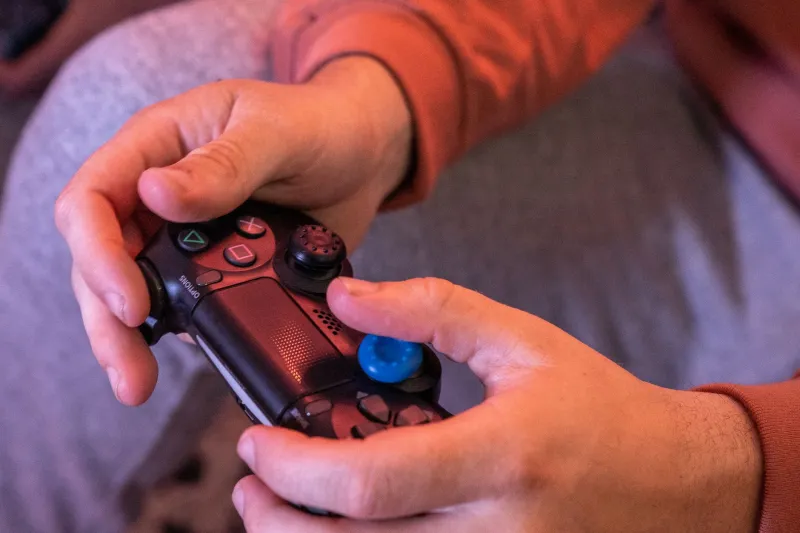
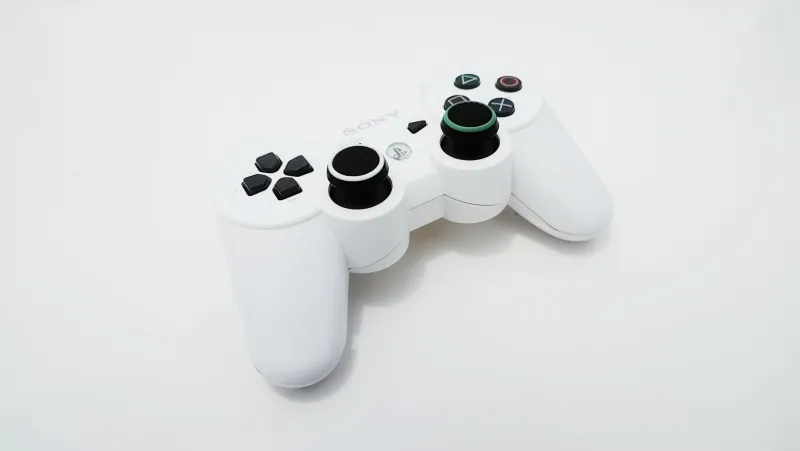
We're talking about one of the most divisive hardware decisions in gaming: offset stick placement (left stick up top, right stick down — the Xbox/Nintendo layout) versus symmetric placement (both sticks sitting side by side in the lower half — the PlayStation layout). The difference looks minor on a spec sheet. In practice, it can completely rewire how you play.
What's Actually Different (and Why It's a Bigger Deal Than It Looks)
On an offset controller like the Xbox Series X pad, your left thumb rests naturally on the left analog stick when your hands are in a neutral grip position. The stick is the first thing your thumb finds. On a symmetric controller like the DualSense, your left thumb's default resting position is on the D-pad instead, and the left stick sits lower, requiring a slight downward shift to engage.
That shift is maybe half an inch. It feels meaningless until you've logged a thousand hours on one layout and then tried to play a fast-paced shooter on the other. Suddenly your thumb is hunting for purchase that isn't where your brain insists it should be.
The muscle memory you've built isn't stored in your brain the way you might think — it's distributed across your tendons, your grip pressure habits, the micro-adjustments your wrist makes without conscious input. Change the anchor point of your left thumb, and you're not just relearning a position. You're asking your entire hand to renegotiate its relationship with the controller.
Genre Matters More Than You Think
The offset vs. symmetric debate doesn't have a universal winner — but it absolutely has genre-specific preferences, and competitive players will tell you this loudly if you give them the chance.
First-person shooters and third-person action games tend to favor the offset layout. The reasoning is straightforward: in these genres, the left stick handles movement and the right stick handles camera/aim. Movement input is constant and foundational — you're always walking, strafing, repositioning. Having the left stick at thumb-height means your movement hand never has to reach. It's right there, always ready, never fatigued by an awkward angle. Xbox players in FPS titles often report that their left hand feels more relaxed over long sessions compared to when they've tried PlayStation pads.
Fighting games and 2D platformers tell a different story. In these genres, the D-pad often takes priority over the left stick for precise directional input. On a symmetric controller, the D-pad sits right where your left thumb naturally falls — giving PlayStation pads a real ergonomic edge for anyone grinding ranked matches in a fighting game or speedrunning a precision platformer. Ask any Street Fighter or Tekken player which controller they reach for, and the DualSense answer comes up more than the Xbox pad.
Sports games and RPGs tend to be more layout-agnostic, though players with deep histories in one ecosystem will still insist their preferred layout feels more intuitive.
Talking to Players Who've Crossed the Divide
We reached out to a handful of competitive players who've had to adapt — or actively refused to — when platform circumstances forced a controller switch.
Marcus, a ranked Apex Legends player from Atlanta who grew up on PlayStation, switched to Xbox when he moved to PC gaming full-time. "The first two weeks were genuinely rough," he told us. "I kept undershooting my movement because my left thumb was reaching down out of habit and hitting air. My brain knew where the stick used to be." He estimates it took him about six weeks of daily play before the offset layout stopped feeling like a foreign object.
On the flip side, Danielle, a PC player from Chicago who's competed in Call of Duty tournaments, has always played on Xbox controllers and says she's tried the DualSense twice and bounced off it both times. "It's not that it's bad. It just makes my left hand work harder in shooters. I feel like I'm reaching for movement instead of just doing movement." She's never made the permanent switch.
Then there's Jordan, a fighting game competitor from Houston who keeps both controllers on his desk. "I literally swap depending on what I'm playing. Xbox for anything with a camera I need to control constantly. PlayStation for anything where I'm doing directional inputs or using the D-pad heavily. People think I'm weird about it but my results back me up."
Jordan's approach is extreme, but it highlights something important: there's no objectively superior layout. There's only the layout that fits the demands of the game you're playing right now, filtered through the muscle memory you've already built.
Can You Actually Retrain Your Hands?
Yes — but it costs time you might not want to spend during a competitive season. Most players report that meaningful adaptation takes anywhere from two to six weeks of regular play, with the first week being the most disorienting. The key is consistency: switching back and forth between layouts during the adaptation period tends to extend the process significantly. Your hands need a clear, repeated signal to overwrite the old pattern.
Some players use deliberate practice strategies — running aim trainers or movement drills specifically on the new layout before touching actual matches. Others just grind through casual modes until the new position stops feeling strange. Both approaches work. The worst thing you can do is split your time evenly between both layouts while hoping your hands will figure it out.
Controller modders and third-party accessory makers have also stepped into this space. Products that physically reposition stick modules — or aftermarket controllers that let you choose your layout — are worth looking at if you genuinely want the best of both worlds without the adaptation tax.
The Bottom Line
Your controller's stick placement isn't just a design preference baked in by some engineer in the 90s. It's an active variable in your competitive performance, and it deserves more conscious attention than most players give it.
If you've ever blamed your aim, your movement, or your reaction time without stopping to consider whether your hands are working against an unfamiliar geometry — this is worth examining. Know your layout. Know your genre. And if you ever do make the switch, give your hands the time they need to actually get there.
Millimeters on the hardware side. Months on the muscle memory side. That's the real math behind stick placement.