Week Four and Nothing Changed: The Real Reason Your New Controller Stopped Making You Better
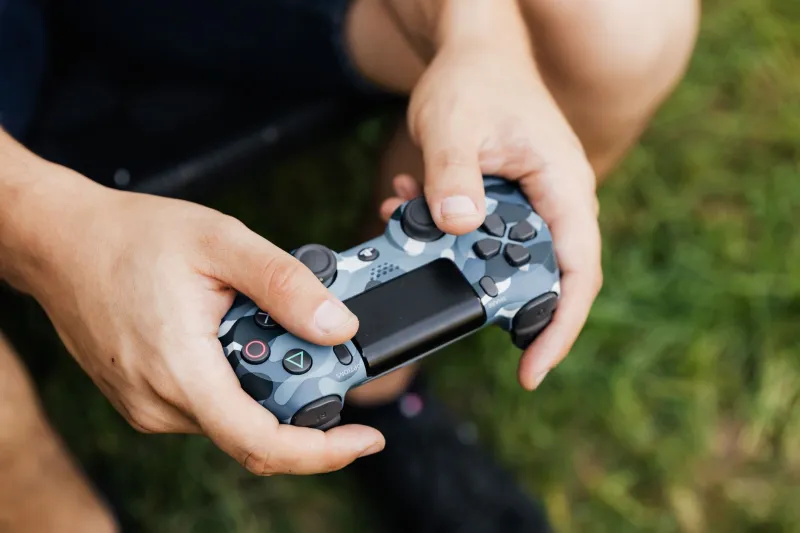
The upgrade high is real. You unbox something new — fresh grips, hall effect sticks, mappable back buttons — and for about a week you feel like a different player. Inputs feel crisper. Your hands feel at home. You're convinced this was the missing piece.
Then week three rolls around. Your stats are flat. Your ranked climb has stalled. And you're already eyeing the next controller on your wishlist wondering if that one will finally do it.
It won't. At least, not for the reason you think.
What's Actually Happening in Your Brain During Week One
That initial performance bump you feel after switching controllers? It's real, but it's not coming from the hardware. It's coming from your attention.
Neuroscientists call it the "novelty effect" — when you introduce new sensory input, your brain temporarily allocates more cognitive resources to processing it. You're hyper-aware of every button press. You're more deliberate. You're paying attention in a way you stopped doing months ago with your old controller.
That heightened focus genuinely improves performance in the short term. But it's not sustainable, and it's not scalable. Within two to three weeks, the novelty fades, your brain stops paying premium attention, and you're back to autopilot — just with a different controller in your hands.
Research on neuroplasticity and motor learning consistently shows that meaningful skill adaptation in fine motor tasks — the kind involved in controller-based gaming — takes somewhere between 21 and 66 days of deliberate repetition to consolidate. A new piece of gear doesn't shortcut that timeline. It restarts it.
The Muscle Memory Math Nobody Talks About
Here's the uncomfortable part: your hands have been building controller-specific muscle memory for months or years. Every button placement, every analog tension level, every trigger pull has been encoded into your motor cortex through thousands of hours of repetition.
When you switch controllers — even to a genuinely superior one — you're not building on that foundation. You're partially dismantling it and starting fresh. Your old patterns don't disappear overnight. They compete with the new ones.
Sports scientists studying instrument transitions in musicians found that re-learning a physical skill on modified equipment produced a performance dip lasting four to six weeks before players returned to baseline, and another four to six weeks before they exceeded it. Gaming involves similar fine motor encoding. The math isn't pretty if you're switching controllers every month chasing marginal gains.
The plateau you're experiencing at week three isn't the controller failing you. It's the adaptation curve bottoming out before it climbs.
How to Tell If It's the Gear or the Gap
Not every plateau is psychological. Sometimes your hardware genuinely is the limiting factor. Here's how to actually tell the difference.
Signs the problem is the equipment:
- You're experiencing measurable input lag compared to a known-good setup
- Stick drift or dead zone inconsistencies are producing ghost inputs you can observe on screen
- Your grip size is legitimately wrong for your hand — you've measured, not just guessed
- The controller is physically failing: sticky buttons, degraded triggers, worn grips
Signs the problem is the adaptation gap:
- Your performance dipped after switching and hasn't recovered
- You feel "off" but can't point to a specific input problem
- Your old controller felt better even though you know the new one has better specs
- You're tempted to switch again before the six-week mark
If you're in the second category, another upgrade isn't the answer. More deliberate practice with what you have is.
The Deliberate Practice Problem
Most gamers practice by playing. That sounds obvious, but it's actually the slower path to improvement. Deliberate practice — the kind that actually accelerates motor learning — means isolating specific mechanics and drilling them outside of normal gameplay conditions.
For controller adaptation specifically, that means:
Aim training with the new hardware. Don't just queue ranked matches. Spend 15 to 20 minutes in a dedicated aim trainer or the game's own practice mode focusing purely on how your thumb moves across the stick at different speeds. You're not trying to win. You're remapping.
Slow down before you speed up. Counterintuitively, reducing your in-game sensitivity temporarily during a controller transition helps your brain build cleaner motor patterns. You're giving your nervous system time to encode accurate movement before adding speed back in.
Film your hands, not your screen. Set up a phone camera pointed at your controller grip during a session. You'll often catch compensation patterns — awkward thumb angles, grip shifting, finger placement drift — that you can't feel but are absolutely costing you precision.
Set a six-week rule. Commit to any new controller for a minimum of six weeks before evaluating whether it's actually helping or hurting. Make that a hard rule. The adaptation science supports it, and it'll save you a significant amount of money long-term.
When Upgrading Actually Makes Sense
None of this means premium gear is pointless. It isn't. A controller with legitimate build quality improvements — reduced input latency, more consistent analog response, better ergonomic fit for your hand size — does create a higher performance ceiling. The hardware ceiling is real.
The issue is that most players aren't anywhere near their hardware ceiling. They're hitting their practice ceiling and mistaking it for a gear problem. Upgrading the equipment raises the theoretical maximum but doesn't move where you currently sit on the skill curve.
Think of it like running shoes. A serious runner will genuinely benefit from high-performance footwear. But if you're running a 12-minute mile, the shoes aren't why. Put in the training miles first. Then the gear starts to matter.
If your fundamentals are locked in — if you've put in the deliberate practice, if your grip and sensitivity are dialed, if you're consistently hitting your skill ceiling on current hardware — then yes, a meaningful upgrade is worth evaluating seriously. That's the point where hardware limitations become the actual bottleneck.
The Grip on This
The controller market is full of genuinely excellent gear right now. Hall effect sticks, customizable tension, back button configurations, premium build quality at multiple price points — there's never been a better time to find hardware that actually fits how you play.
But the best controller in the world can't replace the adaptation work. The plateau you hit at week three isn't a sign you bought the wrong thing. It's a sign your brain is in the middle of rewriting its motor map — and that process takes longer than the novelty high lasts.
Stick with the gear. Put in the deliberate reps. Give it the full six weeks. The climb resumes. It just doesn't do it on your schedule.