One Controller, Four Genres: How the Pros Rewire Their Setup for Every Game They Play
Here's a thought most casual players never seriously consider: the grip that helps you frag out in Call of Duty might be actively working against you the moment you load up Street Fighter. And the controller sensitivity that feels buttery smooth in Hades could make your aim feel like you're dragging through mud in a competitive shooter.
Pro gamers know this. They've known it for a long time. The best of them don't just have one setup — they have a toolkit. Different grip techniques, custom mods, sensitivity profiles, and sometimes entirely different hardware depending on what they're queuing into that session.
This isn't overthinking it. This is the endgame of controller mastery.
Let's break down how elite competitors actually approach customization genre by genre — and what you can realistically borrow from their playbooks.
FPS Games: Precision Over Everything
In first-person shooters — your Apex Legends, your Valorant on controller, your Halo — the entire game lives and dies on aim precision and reaction speed. Pros in this space overwhelmingly favor a claw grip or a modified palm grip that keeps their right thumb close to the center of the right stick for micro-adjustments without sacrificing quick camera sweeps.
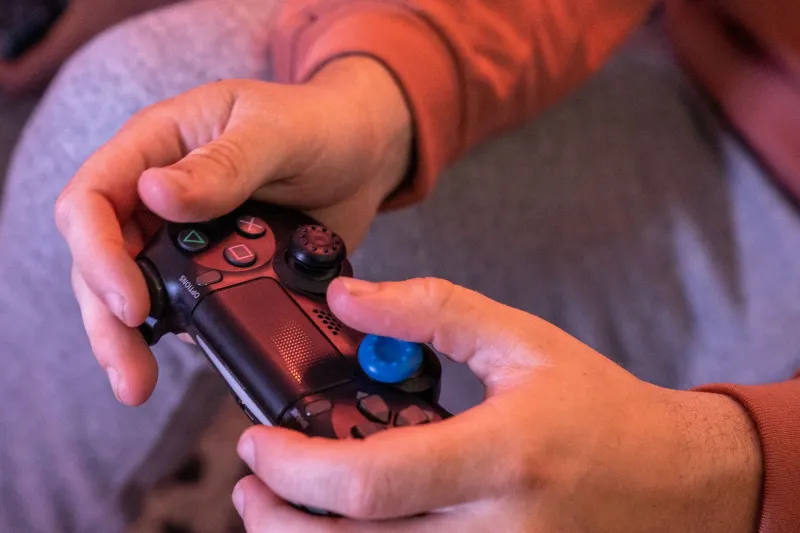
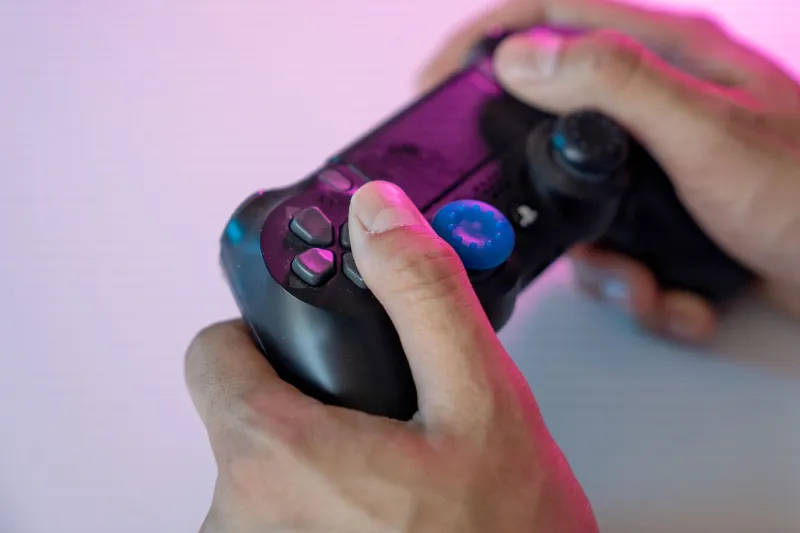
On the hardware side, FPS players tend to gravitate toward convex thumbstick toppers on the right stick. Why? Convex caps give your thumb a natural resting point and reduce slippage during rapid flicks. You'll also notice a lot of competitive FPS players running taller aftermarket sticks on the left (movement) side and shorter, more responsive sticks on the right (aim) side. That asymmetry is intentional — it gives you range of motion for movement while keeping your aim inputs tight and controlled.
Sensitivity settings are usually dialed down lower than you'd expect. Many pros play at sensitivities that would feel sluggish to a casual player, but that low sensitivity is what allows for fine-tuned tracking rather than overshooting targets.
Trigger tension is another lever FPS players pull. Hair-trigger locks — either built into pro controllers or added via third-party mods — cut the trigger travel down dramatically, shaving off precious milliseconds on every shot.
Fighting Games: Grip Stability and Input Consistency
Switch over to Tekken 8 or Street Fighter 6 and the priorities flip almost entirely. Aim precision stops mattering. What matters now is input consistency, button clarity, and the ability to execute complex directional commands under pressure.
Most serious fighting game players — especially at the tournament level — don't even use a standard controller. Arcade sticks and hitboxes dominate the scene. But for those who stick with a gamepad, the adjustments are significant.
Fighting game players tend to use a palm grip, keeping the controller planted firmly in both hands. The goal is stability, not mobility. You're not flicking sticks — you're executing frame-perfect quarter-circle inputs and holding charge positions. A loose or bouncy grip is the enemy here.
D-pad quality becomes a massive deal in this genre. A lot of players will swap to controllers specifically because of their d-pad — the PlayStation d-pad has long been a favorite in the FPS community for exactly this reason. Some players add d-pad cover modifications to get a more tactile, raised feel that reduces missed inputs during fast sequences.
Button sensitivity matters too. Fighting game pros often prefer controllers with shorter actuation buttons or will use trigger and bumper remapping to put critical moves on easier-to-spam inputs.
MOBAs and Strategy Games: Comfort for the Long Haul
MOBAs on controller — think Smite, Predecessor, or even League of Legends on console — introduce a different kind of challenge. Sessions are long. The action isn't as instantly frantic as an FPS, but the sustained mental load is intense, and fatigue becomes the enemy.
Pros playing MOBAs prioritize ergonomic comfort above all else. You'll see a heavy lean toward palm grips and full-hand wraps, often with rubberized grip covers added to the back of the controller. Anything that reduces hand tension over a 45-minute match is worth considering.
Thumbstick tension in MOBAs is typically set to a middle ground — not as light as a casual setup, not as stiff as a pure FPS configuration. Players need enough resistance to position precisely without it wearing out their thumbs over extended play.
Back button attachments and paddles shine in this genre. With so many abilities to manage, having extra inputs on the back of the controller means your thumbs never have to leave the sticks to hit a critical ability. That alone can be the difference between landing a skill shot and fumbling through a teamfight.
Rhythm Games: Timing, Touch, and Muscle Memory
Rhythm games like Guitar Hero (for the nostalgic crowd) or modern titles like Hi-Fi Rush and Taiko no Tatsujin exist in their own universe when it comes to controller feel. Here, timing is everything, and the tactile feedback from your controller directly impacts how accurately your brain syncs button presses to the beat.
Rhythm players often prefer lighter, more responsive button tension and will actively seek out controllers with consistent, predictable button travel. Any mushiness or inconsistency in button feel throws off timing in ways that are genuinely hard to compensate for.
Grip style in rhythm games tends to be a relaxed palm hold — you're not making fast directional decisions, so there's no need for an aggressive claw grip. What you do want is minimal hand fatigue, since rhythm games can involve rapid, repetitive button presses for extended periods.
Some dedicated rhythm players actually add grip tape to their face buttons — not to improve traction on sticks, but to give their fingers more tactile feedback and reduce accidental presses during dense note sequences.
The Takeaway: Your Setup Should Be as Flexible as Your Game Library
The pros aren't attached to one configuration because they're not attached to one genre. They treat their controller like a tool that gets adjusted for the job at hand. Thumbstick toppers, grip covers, sensitivity profiles, trigger locks, back buttons — these aren't just accessories. They're how serious players close the gap between average performance and elite-level execution.
You don't have to overhaul everything at once. Start with the genre you play most, identify the one or two physical adjustments that align with what that game actually demands, and build from there.
The right grip for the right game isn't a luxury. For the players at the top, it's just part of the preparation.