Cut the Cord or Keep It? The Truth About Wired vs. Wireless Controllers for Competitive Play
There's a debate that's been simmering in gaming communities for years, and it usually goes something like this: wired equals fast, wireless equals lag. It sounds logical. It feels true. And for a long time, it basically was true.
But here's the thing — the year is not 2009 anymore. Wireless technology has come a long way, and clinging to that old cable-is-king mentality might actually be holding your game back in ways you haven't considered. Let's break it all down.
The Latency Myth That Won't Die
Ask any self-described "serious" gamer why they use a wired controller and there's a solid chance they'll tell you it's because of latency. Zero input delay. Instant response. No radio signal floating through the air to slow things down.
And look — they're not entirely wrong. Wired connections do technically have lower input latency on paper. But here's where it gets interesting: the actual latency difference between a modern high-quality wireless controller and its wired counterpart is often somewhere in the range of 1 to 4 milliseconds. To put that in perspective, the average human reaction time is somewhere between 150 and 250 milliseconds. You are not — and we say this with love — feeling 4 milliseconds.
That doesn't mean latency doesn't matter at all. It does, especially at the highest levels of competition. But if you're blaming a wireless signal for your ranked losses, there's a very good chance something else is going on.
What Cable Drag Actually Does to Your Performance
Here's the part of the wired controller conversation that almost nobody talks about: the physical resistance of the cable itself.
When you're deep in a session — leaning forward, rotating your controller, shifting your posture during a clutch moment — that cable is moving with you. Or more accurately, it's fighting you. It catches on the edge of your desk. It pulls against your hands when you adjust your grip. It creates just enough resistance and distraction that your muscle memory has to compensate, even if you don't consciously register it.
This is what we'd call cable drag, and it's sneaky. It doesn't announce itself the way lag does. It just quietly chips away at the fluidity of your movements during the moments that matter most.
We spent a few weeks alternating between wired and wireless setups across different game genres — fast-paced shooters, fighting games, and competitive racing titles — and the physical freedom of going wireless was immediately noticeable. Not because the inputs felt faster, but because there was one less thing getting in the way.
The Wireless Options Worth Talking About
Not all wireless is created equal, and this is where a lot of players get burned. Budget wireless controllers from off-brand manufacturers can absolutely introduce noticeable lag, signal dropout, and connectivity hiccups. If you've had a bad experience with wireless in the past, there's a decent chance you were using the wrong hardware.
Here's a quick rundown of the wireless technologies that are actually competitive-grade:
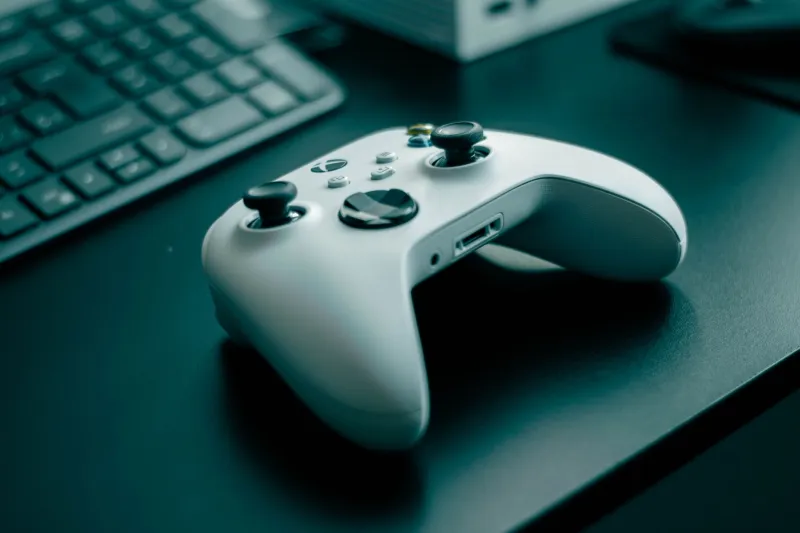
2.4GHz USB Dongles — This is the gold standard for low-latency wireless gaming right now. Controllers like the Xbox Wireless Controller, PlayStation DualSense, and several third-party options from brands like PowerA and 8BitDo use dedicated 2.4GHz receivers that minimize interference and keep input latency impressively tight. If you're gaming on PC or console with one of these, you're not giving anything meaningful up.
Bluetooth — This one's trickier. Bluetooth is convenient and widely compatible, but it tends to run higher latency than a dedicated 2.4GHz dongle — sometimes by a noticeable margin depending on your environment. For casual play, totally fine. For competitive gaming where every frame counts, we'd recommend the dongle route if your controller supports both.
Proprietary Wireless Protocols — Some manufacturers build their own wireless solutions specifically for gaming. These often perform extremely well but lock you into their ecosystem. If you're already invested in a particular platform, this might be a non-issue.
What the Pros Are Actually Doing
It's worth noting that the shift toward wireless at the professional level has been real and meaningful. Console esports events have increasingly moved toward wireless setups, partly for stage logistics and partly because the technology has genuinely matured. You'll still see wired controllers at certain PC-centric tournaments, but the gap is closing fast.
The bigger takeaway from watching how pros manage their gear isn't necessarily wired vs. wireless — it's that they're obsessively deliberate about every variable in their setup. They're not just grabbing whatever's in the box. They're testing, adjusting, and optimizing. That mindset is worth borrowing regardless of which side of the cable debate you fall on.
So Which Should You Actually Use?
Honest answer? It depends on your setup and your priorities.
If you're gaming at a fixed desk with a clean cable management system, a quality wired controller is a perfectly solid choice. You'll get a reliable connection and never have to think about battery life. Just make sure you're routing that cable in a way that minimizes drag — off the back of the desk, not across the surface.
If you're gaming from a couch, moving around a lot, or you just hate the physical tether of a cable, a quality 2.4GHz wireless controller is going to serve you extremely well. The performance hit is negligible for the vast majority of players, and the freedom of movement is a genuine quality-of-life upgrade.
What we'd steer you away from: cheap Bluetooth-only controllers marketed as gaming peripherals. They're the worst of both worlds — the inconvenience of wireless with the latency concerns people are trying to avoid.
The Bottom Line
The cable isn't the hero it used to be. For most players — even competitive ones — the right wireless controller is going to perform right alongside its wired equivalent while removing the physical friction that cables introduce. The key word there is right. Do your homework, invest in something with a dedicated wireless receiver, and stop letting a dated assumption limit your setup.
Grip the game on your terms. Whether that means cord or no cord, just make sure you're making an informed choice — not one based on a myth that technology left behind years ago.